Setting
Ashenfall
Named in the public announcement Still open
RS4 begins in Ashenfall. That place is a landmass to the north-east of Gielinor, first explored in RuneScape: Dragonwilds. The new project is set in the Sixth Age, years after Dragonwilds and years after the destruction of the Dragon Queen Kuldra. In that later time, Ashenfall has changed.
Ashenfall is only the beginning. The ambition is to grow into known places and new places across Gielinor. No later map has been drawn, no next region has been named, and no list of familiar cities has been set. The concept film does show one stretch of this opening land in three wide shots.
North-east landmass
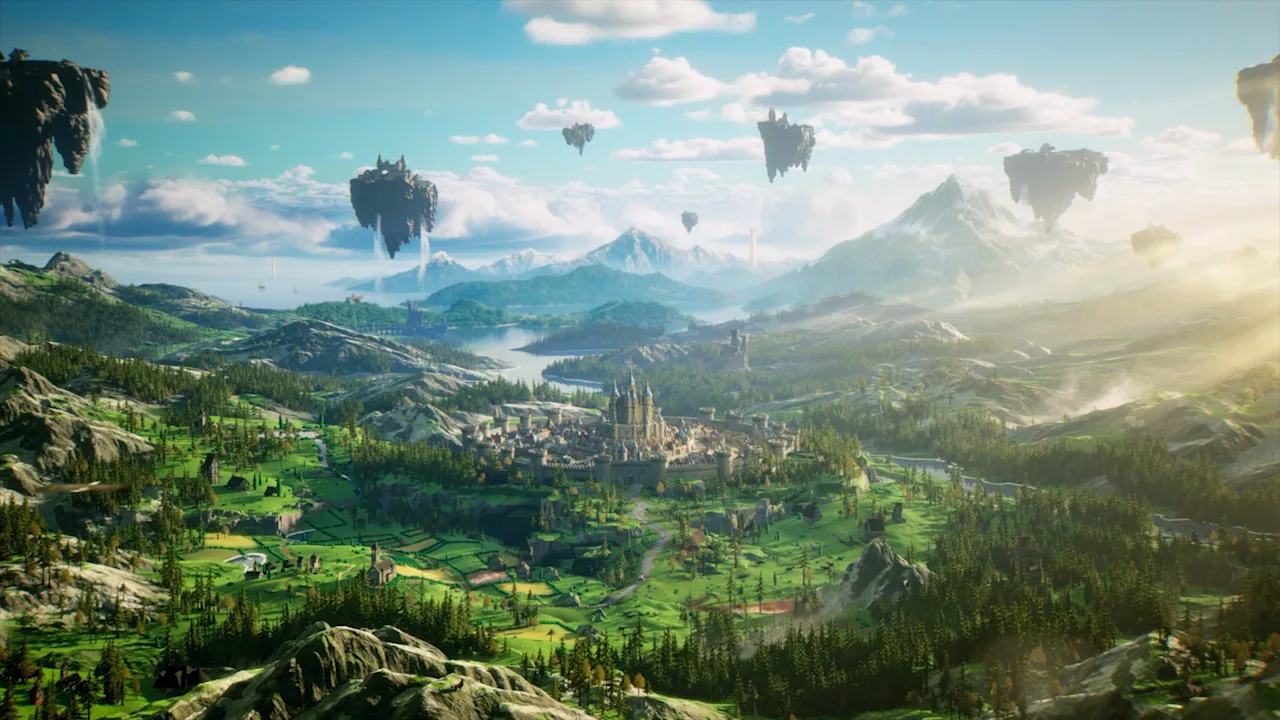
North-east of Gielinor is the only placement given for Ashenfall. There is no coordinate, no sailing time, and no list of borders. What players can see is the film. The opening frames put floating rock islands over a lake, a castle town on the water, and snow mountains behind the town. That is the public picture of the landmass, not a survey.
Dragonwilds is the earlier visit to the same land. The new project is not a continuation of a Dragonwilds save. It is a later chapter in the same geography. If you played the survival game, the name Ashenfall is the bridge. If you did not, the MMO still starts there, on Gielinor, in an age after Kuldra.
North-east is a direction on Gielinor, not a travel time. The film shows water under the islands and snow behind the town. That view is not a ship route, not a fairy ring, and not a walking time from a familiar city. The castle town itself has no name yet.
After Kuldra
Kuldra is the Dragon Queen whose destruction sits in the past of this setting. The RS4 reveal does not retell that story. The tense that matters is the later one: years after that destruction, Ashenfall has changed. The land you may know from Dragonwilds is not presented as a frozen copy.
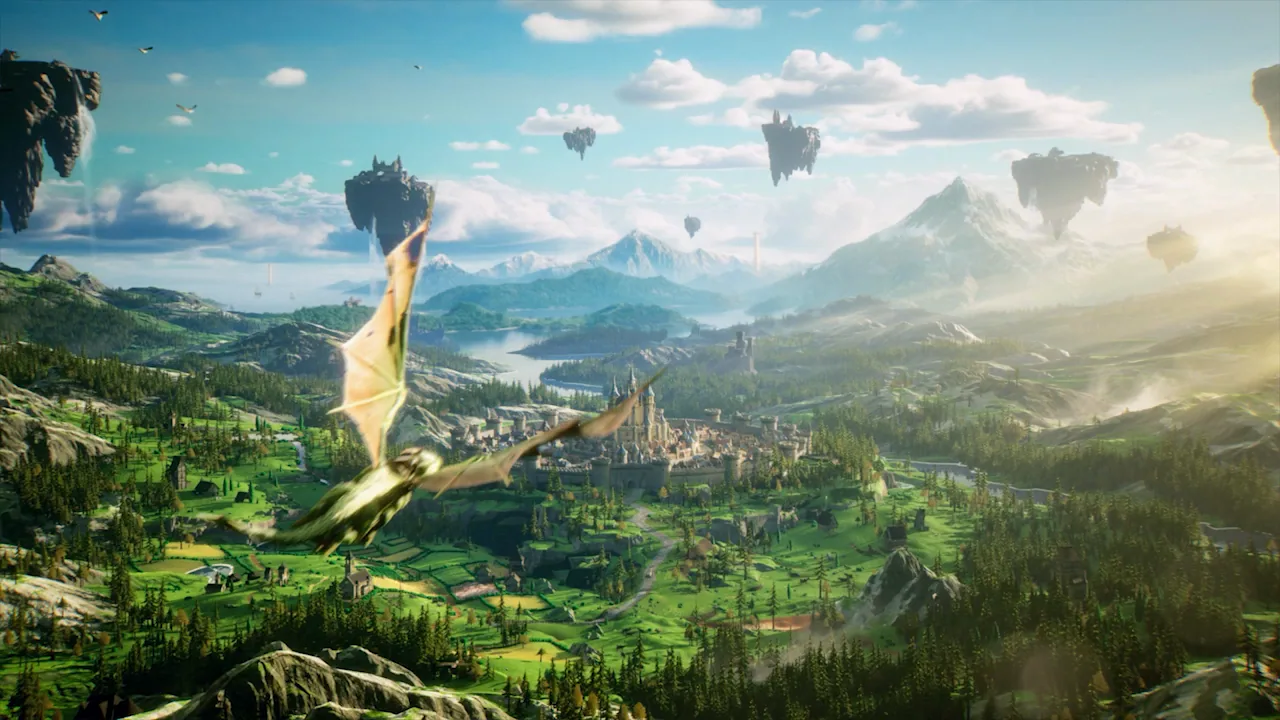
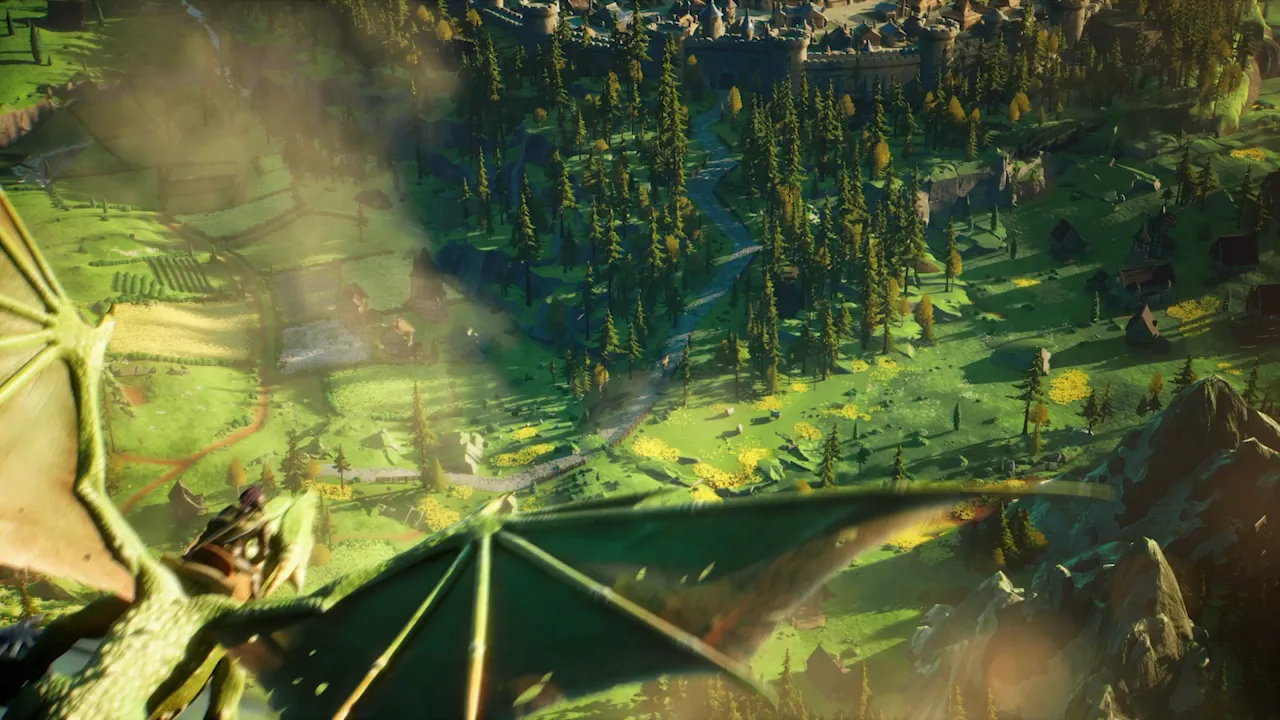
A green dragon over the valley is the film's first living creature in that changed land. The shot does not label the dragon, give it a title, or connect it to Kuldra by name. It shows scale. The valley is wide enough for a dragon to cross in a single beat, with the town and the snow still in the distance. Change, here, is a time jump plus a new view, not a list of finished quests.
Years after Kuldra is the whole clock. No specific year has been set for the jump, and a number added from outside would be someone else's count. What is fixed is the order: Kuldra's destruction, then Dragonwilds' earlier Ashenfall, then a changed land where RS4 begins.
Only the beginning
Ashenfall is only the beginning. The aim is a wider Gielinor: places players already know, and places that have never been on those maps. Known places means geography players already associate with the older RuneScape games. New places means regions that have not been on those maps. Neither list is public.
Only the beginning is a scope, not a roadmap with dates. It does not promise a particular city, a particular god, or a particular year of the Sixth Age beyond the start. It does stop a smaller reading, the one where the whole MMO would be a single survival valley stretched into a lobby. The game opens in one landmass and is meant to widen across Gielinor.
Known places and new places are both a direction of growth. No named city, no map key, and no order of regions arrived with the October 2026 film. The opening land is Ashenfall. The rest of Gielinor is the ambition, not a travel schedule.
Three film views
Three shots carry the land. The first, about eight seconds in, is the island-and-castle view: rock over water, a walled town, snow behind. The second, about fifteen seconds in, puts a green dragon over the valley. The third, a few seconds later, is a wider cut of that same valley and the same dragon. Together they are the repeatable picture of Ashenfall in the reveal. They are concept film, not a flyover of a playable zone.
Later frames leave the valley for a walled city, a market street, and a festival square. Those may be settlements in the same land or a tighter look at the castle town. They have no place names. Until they do, the honest description is visual: one opening region shown from the air, then from the street. The wider valley is the third of the three establishing views.
Treat the three wide shots as the public survey of the opening land, and treat every later street frame as a closer look that still lacks a place name. Pennants, an armor stall, a smith, and a festival tent tell you the land is lived in. They do not tell you what the town is called.
What is unnamed
The reveal names the land, the world, the age, and Kuldra. It does not name the castle town, the festival, the wizards, the smith, or the rider. A three-headed dragon attacking that rider does not appear as a named creature. The frames show separate dragons, green, red, and blue-grey, rather than one body with three heads.
Leave those figures unnamed until a later telling names them. What you can say with the film in front of you is narrower and stronger. Ashenfall is shown with water, rock islands, snow, a town, and dragons, years after Kuldra. That land is the start of a wider Gielinor, not the whole of it.
An unnamed wizard, an unnamed smith, and an unnamed rider can still be described by hat, apron, and hood. The wizard's hat is blue, and another wizard wears yellow with a star-headed staff. The smith wears an apron at an anvil. The rider's hood hides the face, and the mount is a large green dragon with a red eye. That is as far as the frames go.